Before transfusion, blood typing is done to determine the animal’s blood group. Dogs are routinely typed for DEA 1.1. In addition to DEA 1.1, at least 12 other blood group systems are present. Although the risk is less, any antigen might cause a reaction if those cells are given to a previously sensitized dog. A major crossmatch test helps detect antibodies in the recipient’s plasma that could destroy donated red blood cells.
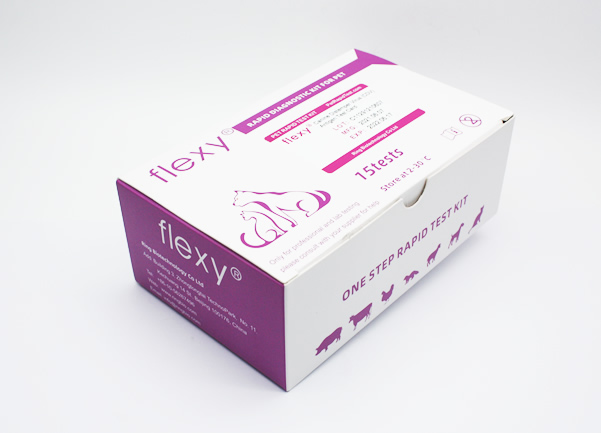
Canine Blood Type Rapid Test Kit
Need a quote, bulk pricing or technical support? Contact RingbioSA on 076 608 3730 or email info@ringbiosa.co.za. Product instructions and certificates, where available, can be downloaded in the Documents section above.
Canine Blood Type Rapid Test Kit is a rapid lateral flow test for the quick typing of canine blood DEA 1.1, It is based on specific immunoreactions and it is quick and reliable. it is quick and reliable. The total detection time is 10min
Basic information
Currently five DEA types have been recognized internationally in dogs: DEA 1, 3, 4, 5, and 7. According to the research, the prevalence of DEA 1 in the canine population is about 60%, thus determination of blood type DEA 1 is very important in veterinary practice for dogs.
Key facts of the Canine Blood Type Rapid Test Kit
- Ready to use kits for pet owners and vet clinic.
- No special instrument required
- Suitable for field test
- Result in 10min.
Canine Blood Type Rapid Test Kit Components
| Item # | Item | Qty |
|---|---|---|
| 1 | Canine Blood Type Rapid Test Kit | 5 pcs |
| 2 | Sample buffer | 5 pcs |
| 3 | Plastic pipettes, 0.5ml | 5 pcs |
| 5 | Kit instruction, | 1 set |
| 6 | Long term storage | 2-8 degree Celsius
|
The most serious risk of transfusion is acute destruction of red blood cells, usually caused by a previously formed antibody to DEA 1.1 or another antigen. This can lead to severe complications.
Extended reading
- Hale A. S. (1995). Canine blood groups and their importance in veterinary transfusion medicine. The Veterinary clinics of North America. Small animal practice, 25(6), 1323–1332. https://doi.org/10.1016/s0195-5616(95)50157-3
- Blood Groups and Blood Transfusions in Dogs - Dog Owners - MSD Veterinary Manual (msdvetmanual.com)