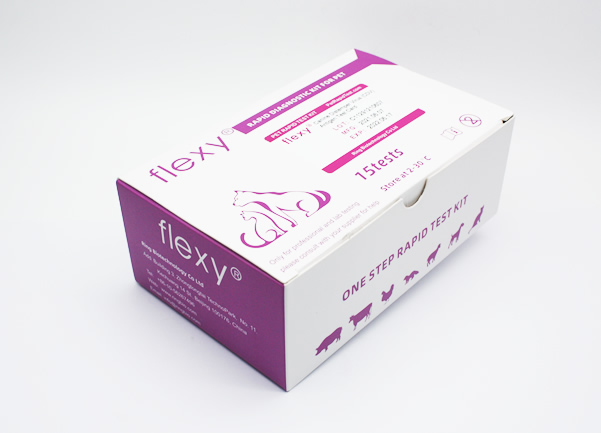
Canine Adenovirus 2 (CAV-2) Real-time PCR kit
Need a quote, bulk pricing or technical support? Contact RingbioSA on 076 608 3730 or email info@ringbiosa.co.za. Product instructions and certificates, where available, can be downloaded in the Documents section above.
Canine Adenovirus type-2 Real-time PCR Test Kit can be used to detect CAV-2 nucleic acid in canine nasopharyngeal and throat swabs, which is rapid, accurate and easy-to-operate. Sensitivity 100%, Specificity 100%.
Basic information
Mycoplasma canis is an opportunistic bacterial pathogen that may colonize dogs and cattle, which has been isolated from mucosal surfaces of dogs or cattle. It has also been associated with respiratory or urinary tract infections in dogs and has recently been identified in brain tissue samples of dogs presenting with meningoencephalitis. This kit uses fluorescence probe PCR (RT-PCR) method to detect the deserved gene of M. canis, which is helpful for diagnosis, monitoring and epidemiological investigation of M. canis.
Key facts of the Canine Adenovirus type-2 Real-time PCR Test Kit
- Ready to use kits for vet clinic
- No extraction required
- Result in 30min.
Canine Adenovirus type-2 Real-time PCR Test Kit Components
| Item # | Item | Qty |
|---|---|---|
| 1 | PCR reaction solution | 120ul |
| 2 | Negative Control | 50ul |
| 3 | Positive Control | 50ul |
| 4 | Exogenous Gene Control | 50ul |
| 5 | Sample buffer | 1ml |
| 6 | Enzyme mix | 10ul |
| 7 | Kit user manual | 1set |
What Is Canine Adenovirus Type 2?
Canine adenovirus type 2 (CAV-2) causes respiratory disease in dogs and is one of the infectious agents commonly associated with canine infectious tracheobronchitis, which is also known as kennel cough. Canine infectious tracheobronchitis is usually spread from dog to dog through coughing. Dogs that are around other dogs, such as at boarding facilities, grooming salons, or dog parks, are at increased risk for exposure. After CAV-2 has been transmitted to a dog, the incubation (development) period of the disease is approximately 3 to 10 days. The infection is typically self-limiting (resolving without treatment); however, in some cases, it can lead to pneumonia.
What Are the Symptoms of Canine Adenovirus Type 2 Infection?
Common symptoms of CAV-2 infection include: dry cough, retching and gagging, coughing up white foamy discharge, fever and nasal discharge, which may lead to conjunctivitis.
How to diagnose and treat Canine Adenovirus Type 2 infection?
Infectious canine tracheobronchitis is usually based on clinical symptoms and possible exposure history. Treatment of CAV-2 infection is usually limited to supportive care, which may include fluids, rest, and antibiotics to treat secondary infections that may occur.