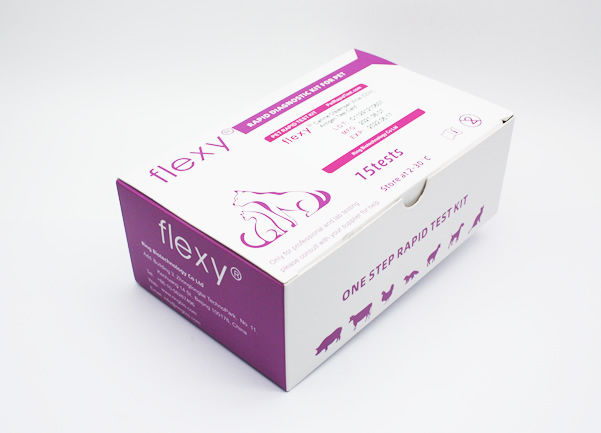
Bordetella bronchiseptica Real-time PCR Kit
Need a quote, bulk pricing or technical support? Contact RingbioSA on 076 608 3730 or email info@ringbiosa.co.za. Product instructions and certificates, where available, can be downloaded in the Documents section above.
Bordetella bronchiseptica Real-time PCR Test Kit can be used to detect bordetella bronchiseptica nucleic acid in canine nasopharyngeal and throat swabs, which is rapid and accurate.
Basic information
Bordetella bronchiseptica is a small, gram-negative, rod-shaped bacterium of the genus Bordetella. It can cause infectious bronchitis in dogs and other animals, but rarely infects humans. This kit uses fluorescence probe PCR (RT-PCR) method to detect the deserved gene of bordetella bronchiseptica, which is helpful for diagnosis, monitoring and epidemiological investigation of bordetella bronchiseptica.
Key facts of the Bordetella bronchiseptica Real-time PCR Test Kit
- Ready to use kits for vet clinic
- No extraction required
- Result in 30min.
Bordetella bronchiseptica Real-time PCR Test Kit Components
| Item # | Item | Qty |
|---|---|---|
| 1 | PCR reaction solution | 120ul |
| 2 | Negative Control | 50ul |
| 3 | Positive Control | 50ul |
| 4 | Exogenous Gene Control | 50ul |
| 5 | Sample buffer | 1ml |
| 6 | Enzyme mix | 10ul |
| 7 | Kit user manual | 1set |
What are the symptoms of Bordetella bronchiseptica?
A persistent honking, hacking, and/or gagging cough is typical of Bordetella infection. Many owners describe the cough as “vomiting” or believe something is stuck in their dogs’ throats. In these cases, this presentation is merely an uncomfortable symptom of an inflamed trachea. Fever and lethargy (tiredness) may also occur. Sometimes, a whitish or greenish nasal discharge is also observed, but in other cases, clinical signs may be absent or so mild that they go unnoticed. Although sophisticated testing is available, diagnosis is generally based on a history of exposure to infected dogs or a recent visit to a kennel, combined with the presence of signs of illness.
How is Bordetella bronchiseptica treated?
Treatment In mild infections, treatment is generally supportive because the disease can resolve on its own unless a secondary (subsequent) infection occurs. Precautionary antibiotics to prevent secondary infection may be prescribed. In severe cases, treatment may consist of administration of antibiotics, cough suppressants, and inhalant medications to help patients breathe more easily. When possible, a harness, rather than a collar, is recommended for leash walking of ill dogs. A traditional collar puts pressure on already sensitive and irritated tracheal tissues and can induce coughing episodes.
Extended reading
- Bordetella bronchiseptica: a rare cause of meningitis