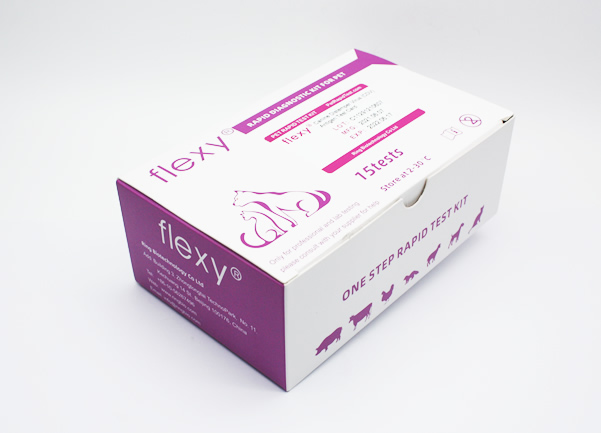
Chlamydophila felis Real-time PCR Kit
Need a quote, bulk pricing or technical support? Contact RingbioSA on 076 608 3730 or email info@ringbiosa.co.za. Product instructions and certificates, where available, can be downloaded in the Documents section above.
Chlamydophila felis Real-time PCR Test Kit is a real-time fluorescence PCR test to detect Chlamydophila felis in cats. Sensitivity & Specificity 100%, GMP certified.
Basic information
Chlamydia felis (formerly Chlamydophila felis and before that Chlamydia psittaci var. felis) is a Gram-negative, obligate intracellular bacterial pathogen that infects cats. It is endemic among domestic cats worldwide, primarily causing inflammation of feline conjunctiva, rhinitis and respiratory problems.
Key facts of the Chlamydophila felis Real-time PCR Test Kit
- Ready to use kits for the vet clinic
- No extraction required
- Result in 30min.
Chlamydophila felis Real-time PCR Test Kit Components
| Item # | Item | Qty |
|---|---|---|
| 1 | PCR reaction solution | 120ul |
| 2 | Negative Control | 50ul |
| 3 | Positive Control | 50ul |
| 4 | Exogenous Gene Control | 50ul |
| 5 | Sample buffer | 1ml |
| 6 | Kit user manual | 1set |
Overview: Chlamydophila felis is a Gram-negative bacterium and its primary target is the conjunctiva. The bacterium does not survive outside the host.
Infection: Transmission requires close contact between cats; ocular secretions are probably the most important body fluid for infection. Most cases occur in cats under 1 year of age. Chlamydophila felis is the infectious organism most frequently associated with conjunctivitis.
Disease signs: Unilateral ocular disease generally progresses to become bilateral. There can be intense conjunctivitis with extreme hyperaemia of the nictitating membrane, blepharospasm and ocular discomfort. Transient fever, inappetence and weight loss may occur shortly after infection, although most cats remain well and continue to eat.
Diagnosis: PCR techniques are now preferred for diagnosing C felis infection. Ocular swabs are generally used. In unvaccinated cats, antibody detection can be used to indicate infection.
Disease management: Tetracyclines are generally regarded as the antibiotics of choice. Doxycycline has the advantage of requiring only single daily administration and is given at a dose of 10 mg/kg orally. Vaccination should be considered if there is a history of confirmed chlamydial disease in a shelter. Single housing and routine hygiene measures should suffice to avoid cross-infection. Cats maintained together for longer terms should be vaccinated regularly. In breeding catteries where C felis infection is endemic, the first step should be to treat all cats with doxycycline for at least 4 weeks. Once clinical signs have been controlled, the cats should be vaccinated.
Vaccination recommendations: Vaccination should be considered for cats at risk of exposure to infection. Vaccination generally begins at 8-10 weeks of age, with a second injection 3-4 weeks later. Annual boosters are recommended for cats at continued risk of exposure.
Extended reading
- Gruffydd-Jones T, Addie D, Belák S, Boucraut-Baralon C, Egberink H, Frymus T, Hartmann K, Hosie MJ, Lloret A, Lutz H, Marsilio F, Pennisi MG, Radford AD, Thiry E, Truyen U, Horzinek MC. Chlamydophila felis infection. ABCD guidelines on prevention and management. J Feline Med Surg. 2009 Jul;11(7):605-9. doi: 10.1016/j.jfms.2009.05.009. PMID: 19481040.