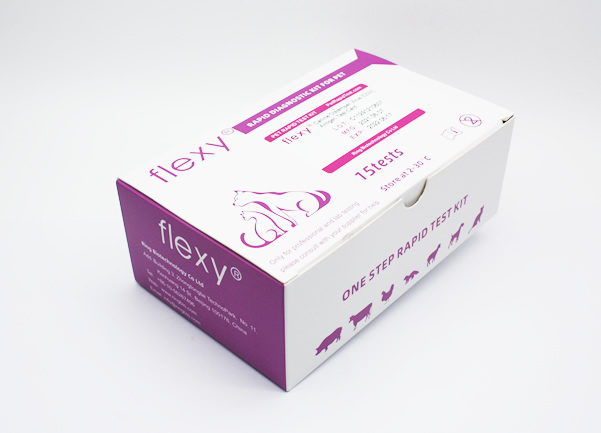
Feline Coronavirus (FCoV) Ag Real-time PCR Kit
Need a quote, bulk pricing or technical support? Contact RingbioSA on 076 608 3730 or email info@ringbiosa.co.za. Product instructions and certificates, where available, can be downloaded in the Documents section above.
Feline coronavirus Real-time PCR test, FCoV RT-PCR Test is to detect feline coronavirus in cat feces. which is rapid, accurate and easy-to-operate. Sensitivity 100%, Specificity 100%.
Basic information
Feline coronavirus (FCoV) is a positive-stranded RNA virus that infects cats worldwide. It is a coronavirus of the species Alphacoronavirus 1 which includes canine coronavirus (CCoV) and porcine transmissible gastroenteritis coronavirus (TGEV). It has two different forms: feline enteric coronavirus (FECV) that infects the intestines and feline infectious peritonitis virus (FIPV) that causes the disease feline infectious peritonitis (FIP).
Key facts of the Feline coronavirus Real-time PCR test
- Ready to use kits for the vet clinic
- No extraction required
- Result in 30min.
Feline coronavirus Real-time PCR test Components
| Item # | Item | Qty |
|---|---|---|
| 1 | PCR reaction solution | 120ul |
| 2 | Negative Control | 50ul |
| 3 | Positive Control | 50ul |
| 4 | Exogenous Gene Control | 50ul |
| 5 | Sample buffer | 1ml |
| 6 | Enzyme mix | 10ul |
| 7 | Kit user manual | 1set |
What is feline coronavirus, FCoV?
FCoV is a common and contagious virus which is passed in the faeces of cats. It is more commonly found in multi-cat. And infection in some leads to the fatal disease feline infectious peritonitis (FIP).
Recognition and Diagnosis of FCoV
A positive diagnosis of FIP can be difficult to make, particularly in the absence of characteristic clinical signs, including most classically, effusion in the chest or abdomen. Diagnosis is generally made based on a combination of signalment, clinical signs, blood work and specific tests.
PCR can be used to detect viral genetic material in tissue or body fluid; there are no effective PCR tests for detecting virus in the blood. Historically, PCR testing could not distinguish between FCoV and FIPV, and results lacked clinical significance similar to FCoV titer testing.
Extended reading
- Feline coronavirus, Shelter medicine, UC Davis
- Jaimes JA, Whittaker GR. Feline coronavirus: Insights into viral pathogenesis based on the spike protein structure and function. Virology. 2018;517:108-121. doi:10.1016/j.virol.2017.12.027